

What It Is, Why It Works, and How to Get Started
By Taylor Banner, LCSWA
I often meet couples who walk into their first session with a mix of hope, hesitation, and a million unspoken questions. Is therapy really going to help us? Are we too far gone? Are we doing something wrong? And underneath it all — is this relationship still worth fighting for?
These are not easy questions, but they are incredibly human ones. And the simple truth is this: most relationships will hit a stretch where things feel confusing, stuck, or even quietly distant. Sometimes it’s about one big rupture. Sometimes it’s the slow build-up of unmet needs, resentments, or misunderstandings. Couples therapy is a space to pause, reflect, and reconnect with what brought you together in the first place — and to grow into something stronger.
Whether you’re just starting to explore this option or you’ve been considering it for a while, this guide is meant to walk you through what couples therapy really looks like, how it helps, and what to expect when you begin.
What Couples Therapy Is (and What It’s Not)?
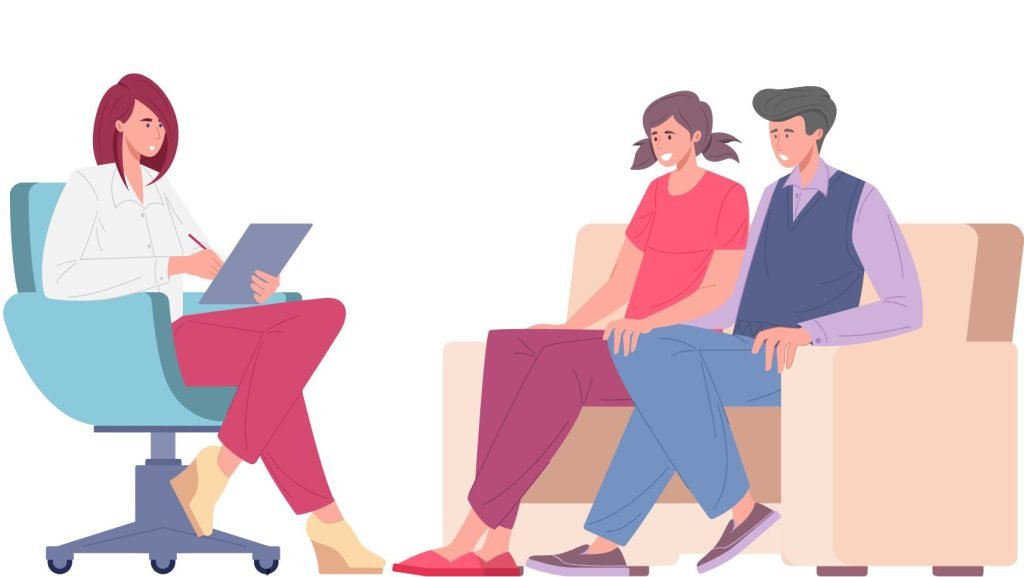
Couples therapy isn’t about picking sides. It’s not a place where one person is declared “right” and the other “wrong.” It’s not about quick fixes or teaching you to communicate in generic, scripted ways.
Instead, therapy with me is about creating a safe space where both people can speak honestly, listen differently, and begin to understand not just the conflict but the longing underneath it. It’s a collaborative process where we explore patterns, rewrite habits, and work toward relational repair — not perfection, but something real and resilient.
In couples therapy, I help you:
- Identify recurring patterns that keep you stuck
- Practice tools to de-escalate conflict before it spirals
- Explore deeper emotional needs that may go unspoken
- Rebuild trust and safety, especially after hurt or betrayal
- Learn to listen not just to words, but to meaning and emotion
I often tell couples that the goal isn’t to stop fighting. The goal is to fight better — with respect, clarity, and repair. Conflict can be a doorway to intimacy when it’s handled with care.
Why Couples Therapy Works?
Every couple has its own story. But what I’ve seen over and over again is that underneath the surface arguments – the dishes, the schedules, the silence, are deeper emotions waiting to be acknowledged.
Maybe one partner feels unheard. Maybe the other feels like they’re always failing. Maybe both are carrying pain from earlier chapters in life that are showing up in this one.
When we understand the emotional roots of our reactions, we can begin to respond instead of just react. We can build bridges instead of walls. Couples therapy works because it gives us language for what we didn’t know how to name. And naming is often the first step toward healing.
When Should Couples Consider Therapy?
There’s a common myth that therapy is only for couples “on the brink.” In reality, some of the most impactful work happens when couples come in early — before patterns harden, before disconnection deepens, before the resentment feels irreversible.
Some signs it might be time:
- You keep having the same fight without resolution
- Communication feels tense, avoidant, or surface-level
- One or both partners feel emotionally lonely
- There has been a rupture in trust or intimacy
- Life transitions (new jobs, parenting, loss) have shifted the dynamic
- You want to strengthen the relationship, even if nothing is “wrong”
Therapy is not only about crisis. It’s about care. Choosing to work on your relationship is not a sign of failure. It’s a sign of commitment.
What a Session With Me Looks Like?
When you begin couples therapy in Charlotte with me, we start slow. The first few sessions are about getting to know you both as individuals and as a couple — your story, your values, your pain points, and your hopes.
I don’t use a one-size-fits-all approach. My work is deeply relational and intuitive. I draw from evidence-based models like:
- Emotionally Focused Therapy (EFT), which helps partners identify and express core emotional needs
- The Gottman Method, which teaches practical tools for communication and conflict management
- Attachment Theory, which helps us understand how early patterns affect adult relationships
- Mindfulness and nervous system regulation, especially when emotions run high
We don’t rush. We don’t judge. We listen. We get curious. And we build a new framework for partnership — one rooted in empathy, mutual respect, and sustainable change.
Common Fears About Couples Therapy
I know stepping into couples therapy can feel scary. You might worry that things will get worse before they get better. Or that you’ll be blamed. Or that your partner won’t show up emotionally.
Here’s what I want you to know:
- You don’t have to be fully “ready.” Just willing.
- Progress doesn’t mean perfect agreement. It means new understanding.
- I’m not here to fix you. I’m here to support you in discovering new ways to relate.
- You don’t have to do all the talking. I’ll help guide and pace the conversation.
It’s okay if you’re nervous. It’s okay if you’re unsure. Starting is still a beginning.
The Real Impact of Couples Therapy
When couples commit to this work, here’s what I often see:
- Less reactivity, more presence
- Deeper intimacy that includes emotional, not just physical, connection
- Clarity around shared values and goals
- Increased respect for one another’s differences
- A more secure and satisfying bond
Couples who once felt like adversaries begin to feel like teammates again. And that shift — from “me versus you” to “us” — changes everything.
How to Begin Couples Therapy in Charlotte
Starting is simple. You can schedule an initial consultation with me where we talk through what’s bringing you in, what you’re hoping for, and whether this feels like the right fit.
In therapy with me, you’ll find a space that is warm, nonjudgmental, and deeply supportive of both partners. My hope is that you leave each session with a little more clarity, a little more understanding, and a little more hope — even if things are messy.
You don’t have to know exactly what to say. You just have to show up.
Conclusion: You Deserve Support
Relationships are not supposed to be perfect. They are supposed to be places where we grow, heal, and learn. And that learning sometimes needs support.
If you are considering couples therapy in Charlotte, I hope you give yourself permission to take the next step. Not because your relationship is broken, but because it’s worthy of care. You are worthy of care.
Therapy with me is not about changing who you are. It’s about helping you feel more seen, more heard, and more connected — to yourself and to the one you love.
With care,
Taylor Banner, LCSWA
Montgomery Counseling Group
Frequently Asked Questions
1. Is couples therapy only for married couples?
Not at all. I work with couples in all kinds of relationships — dating, engaged, cohabiting, or married. If you care about your relationship, therapy can support it.
2. What if my partner is reluctant to try therapy?
That’s a common concern. Sometimes, starting with a consultation helps ease fears. I often suggest we have one session to talk through hesitations and go from there.
3. Will you take sides in therapy?
No. My role is to support the relationship, not to “fix” one partner. I create space for both voices to be heard equally and respectfully.
4. Can therapy help us if there has been betrayal or infidelity?
Yes. While it is hard work, many couples recover and rebuild after rupture. Therapy can provide the structure and support needed for that healing process.
5. How many sessions does couples therapy usually take?
That varies. Some couples come for a few months, others stay longer. We’ll talk about your goals and adjust based on your needs.
6. Is online couples therapy available?
Yes. I offer virtual sessions for couples who prefer remote access or have scheduling constraints.
7. What if things get emotional in a session?
That’s completely okay. Emotions are part of the work. I’ll guide us through with care, making sure both partners feel safe and supported.