
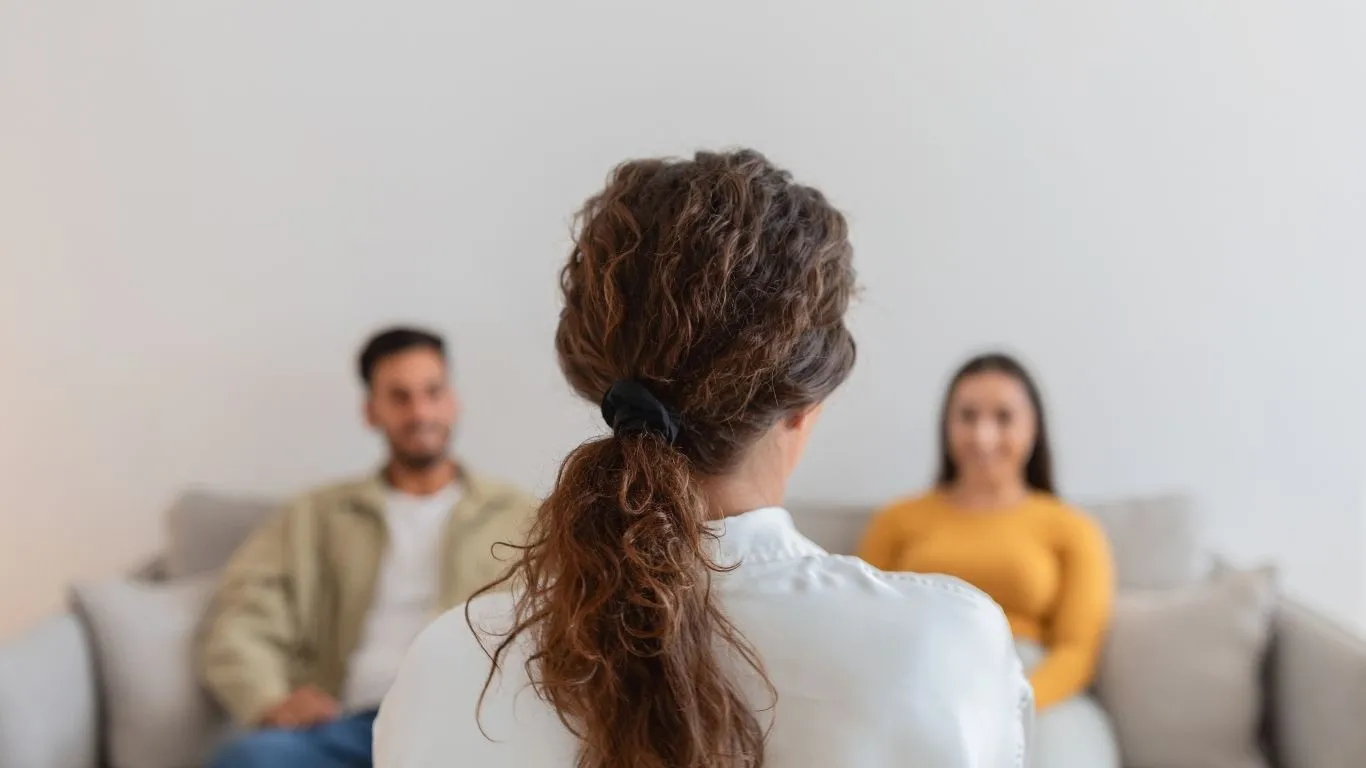
From Conflict To Connection
A Practical Guide for Finding the Right Couples Therapist for Partners Seeking Support
Deciding to seek couples therapy is the first step, bravely taken. But with so many therapists in practice, how do you know which one will be right for you?
Here’s a guide to help you choose:
1. Look for Specialized Training in Couples Therapy
Not all couples therapists who see couples have trained in working with couples. Effective couples therapy prerequisites a distinct set of skills that extend far beyond individual counseling.
When researching therapists, look for training or certification in evidence-based couples therapy approaches such as:
- Emotionally Focused Therapy (EFT)
- Gottman Method Couples Therapy
- Imago Relationship Therapy
- Integrative Behavioral Couple Therapy (IBCT)
These approaches are science-backed and proven to be effective for improving emotional connection, communication patterns, and conflict resolution.
A therapist whose specialization is couples therapy will understand relationship dynamics and not perceive issues as specific to one partner.
2. Choose a Therapist Who Is Neutral and Balanced
A good couples therapist is not partial to one partner. The therapist should ensure neutrality and make both partners feel heard, respected, and emotionally safe in therapy sessions.
During initial consultations, assess whether the therapist:
- Divides attention equally between both partners
- Validates each person’s experience without playing the blame game.
- Identifies patterns in the relationship instead of focusing on who is right.
If one partner feels consistently judged or misunderstood, therapy is unlikely to be effective.
3. Consider the Therapist’s Approach to Conflict
Conflict is often unavoidable in relationships, but how it is dealt with in therapy makes a difference.
You can find out the therapist’s approach to conflict handling by asking questions like:
- How do you help couples manage recurring arguments?
- Do you focus on communication skills, emotional safety, or both?
- How do you handle high-conflict or emotionally charged sessions?
A skilled couples therapist helps partners get out of toxic cycles by sorting out underlying emotions, using empathy rather than defensiveness.
Also Read: The Life You Were Not Meant to Live
4. Ensure The Therapist Creates a Safe and Structured Space
Couples therapy should not feel like a battleground. A good therapist lays out clear boundaries at the start so sessions remain respectful and productive.
A strong therapeutic structure incorporates:
- Goals for each session
- Guidelines for respectful communication
- Interventions that prevent escalation
- Support when conversations become emotionally overwhelming
Therapy should instill a sense of safety, emotional and psychological, which is essential for meaningful progress.
5. Check The Therapist’s Experience With Your Specific Concerns
Every relationship is unique. Some couples seek therapy for communication breakdowns, while others want counseling for issues such as infidelity, trauma, parenting stress, cultural differences, or life transitions.
Look for a therapist who works on issues on which you and your partner need help.
Do you need it?
- Trust repair and affair recovery
- Premarital or pre-commitment counseling
- Cross-cultural or interracial relationships
- LGBTQIA+ affirming couples therapy
- Mental health challenges affecting the relationship
You don’t need to share every detail initially, but choosing a relationship therapist with relevant experience can build confidence and trust.
6. Pay Attention to the Fit
Therapy becomes most effective when the therapist’s style, personality, and communication suit the needs of both partners.
After one or two sessions, ask these questions:
- Do we feel understood?
- Does the therapist explain things clearly?
- Do we feel hopeful after sessions, even when topics are complicated?
- Are we learning new ways to understand each other?
If the fit doesn’t feel right, finding another therapist can be the right move.
7. Practical Considerations Matter Too
While emotional fit is essential, logistics also play a role in consistency and success.
Consider:
- Session fees and insurance coverage
- Availability that works for both partners
- In-person vs. online sessions
- Location and scheduling flexibility
A therapist you can realistically commit to seeing regularly is far more helpful than a “perfect” option that’s difficult to access.
8. Trust the Process — and Your Instincts
Couples therapy is not about fixing one partner or “saving” a relationship overnight. It’s about understanding patterns, strengthening emotional connection, and learning healthier ways to relate.
A good couples therapist:
- Helps you clarify what you want from the relationship
- Encourages accountability and compassion
- Supports growth—together or individually
- Respects your pace and goals
If you feel supported, challenged in healthy ways, and guided with care, you’re likely in the right place.
MCG ranks high on the list of couples therapy Montgomery.