
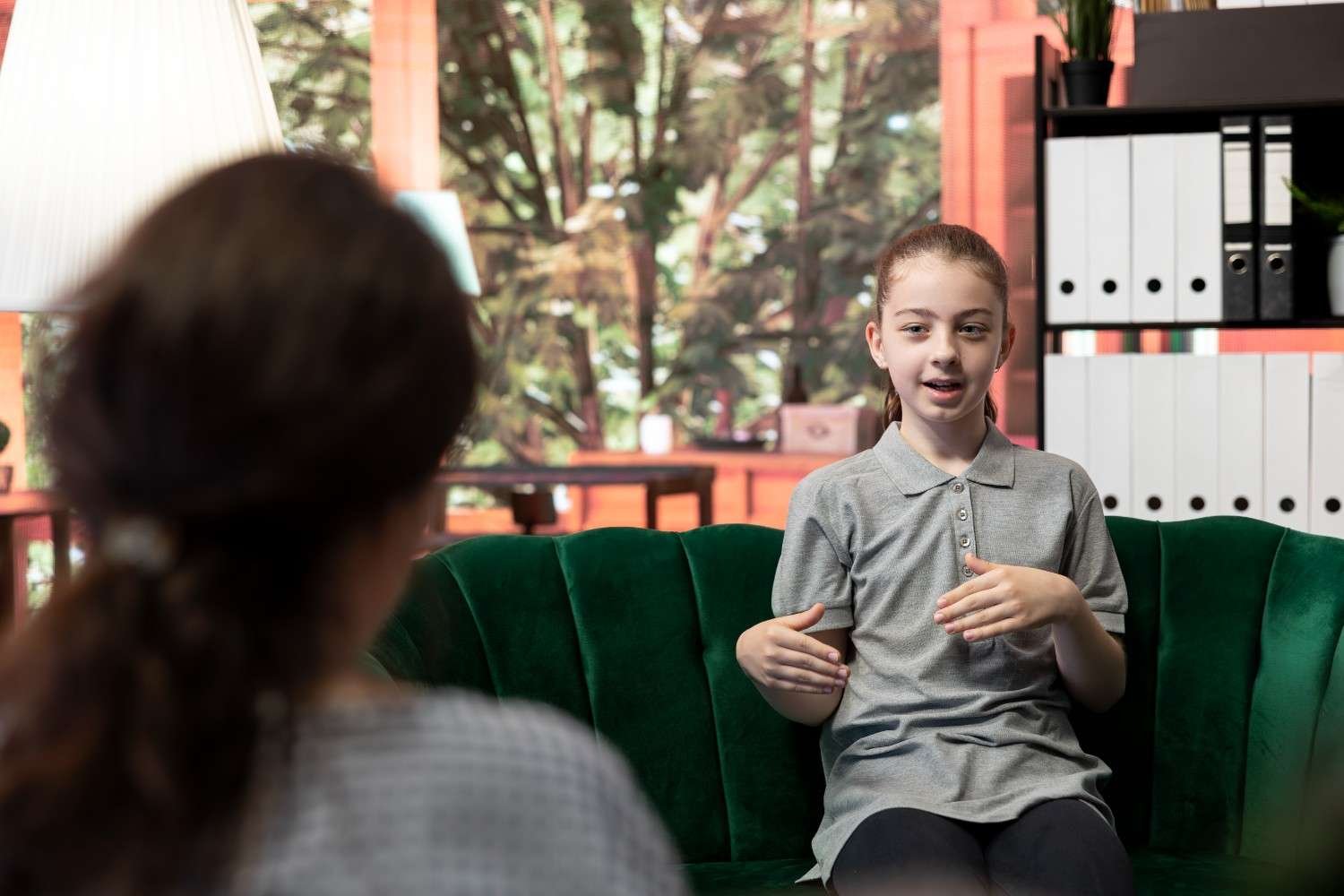
If you are a teenager or young adult reading this: you already know something isn’t quite right. The knowing isn’t the problem. The problem is the space between knowing and doing something about it, and how easy it is to stay in that space for a very long time. If you are a parent or caregiver reading this: you have watched your child struggle. You have done the research, found someone who seemed like the right fit, and hit the same wall each time. At Montgomery Counseling Group, we understand both of those experiences. And they are more connected than they might appear.
Resistance to Help Is Not the Same as Not Wanting Help
There is a version of this story that makes the reluctant person look like the problem. They know they need support. They have access to it. They are still not going. From the inside, it rarely feels like stubbornness or avoidance. What it usually feels like is this: the very thing making help necessary is also what makes it hard to reach for. American Psychological Association child mental health research consistently shows that protective avoidance in children and adolescents is an adaptive response, not a character flaw.
A young person who is anxious about the unknown finds that a first therapy session is, by definition, an unknown. A teenager who has learned that vulnerability leads to pain is now being asked to be vulnerable with a stranger. A child who has been managing hard things quietly for a long time has developed real reasons to keep managing them quietly. These are not obstacles to getting better. They are the same protective strategies that have been holding things together. They make complete sense. And they do not disappear because someone says it is time to go.
What Makes the First Session the Hardest One
Most people who have been to therapy say the same thing: the first session was the hardest. Not because of what happened in it, but because of everything they imagined would happen before they got there. The National Institute of Mental Health’s resources on child and adolescent mental health emphasize that anticipatory anxiety is one of the most common barriers to young people accessing care.
The anticipation carries everything. What will they ask? What if I do not know what to say? What if I cry, or do not cry, or say the wrong thing? What if they think I am making too much of it, or not enough? What if I go and nothing changes? These are not irrational concerns. They are what happens when a person is asked to do something new and unfamiliar while already under pressure.
The difficulty of getting there is not evidence that therapy is wrong for the person. It is evidence that asking for help, when someone is not used to doing that, takes real effort.
Why the Environment Matters as Much as the Approach
Not all therapy spaces are built the same way. For young people, the environment itself sends a message before anyone has said a word. Research on anxiety in children shows that environmental cues — unfamiliar settings, formal check-in processes, clinical waiting rooms — can activate the very threat response that brought the child in for help. A clinical space that signals in small ways that something is wrong with you for being there raises the barrier rather than lowering it.
For children and adolescents who are already uncertain, already stretched, already working hard to be there at all, the environment is part of the clinical work. A space built with young people in mind removes friction the person should not have to carry.
If you are wondering what the MCG environment for children and adolescents actually looks like, the team page has more about our clinicians and the approach we take with young clients.
What Caregivers Can and Cannot Do
For parents and caregivers watching from the outside, this is its own kind of hard. Staying low-pressure, keeping the door open, and signaling that the decision to try will be supported rather than managed: these are the things that tend to matter.
Young people who have the hardest time getting through the door are often the ones who sense that the adults around them are more invested in the outcome than in the process. When help is offered without conditions attached, it lands differently.
If your child has said no more than once, that is information. It does not mean that help is impossible. It may mean the approach, the setting, or the timing needs adjusting. It may also mean that the reluctance itself deserves curiosity rather than pressure.
For the young person reading this alongside, or instead of, a caregiver: the resistance you feel is yours to understand, not to override. It developed for reasons that made sense. A space that takes those reasons seriously, rather than treating them as something to get past, is a different experience from what most people fear when they imagine going.
Small Steps That Are Not Actually Small
Looking up a name. Reading a page. Sitting with the idea for a day instead of dismissing it. Sending one message. These are the steps that come before the steps that look like progress, and they are real. If you’re a young person still figuring out whether therapy is for you, browsing our FAQs is a low-pressure way to understand what working with MCG actually looks like — with no commitment required. If this is where things are right now, that is enough to start with.
Frequently Asked Questions
My child refuses to go to therapy. Is there anything I can do?
Refusal is often protective rather than oppositional. A child who will not go may be protecting against feeling exposed, feeling judged, or feeling like something is being confirmed about them that they are not ready to have confirmed. Those are real concerns, not excuses. Understanding what is underneath the no, rather than working to overcome the no itself, tends to open different possibilities. A setting built around low-barrier entry — that does not require the young person to perform readiness they do not yet have — can shift what feels possible. MCG works with children and adolescents who are reluctant, and builds the approach around where each young person is rather than where they are supposed to be.
Is it normal to feel scared or resistant about starting therapy?
It is very common. The anticipation of a first session is often harder than the session itself. Many of the people who find therapy most useful started out most uncertain about going.
How young does MCG work with?
Laura is a Licensed Clinical Social Worker Associate with the Montgomery Counseling Group . She has been a licensed therapist for 5 years. She earned a B.A. in Psychology from Skidmore College and completed her master’s degree in Social Work at Columbia University where her specialization was advanced clinical practice with an emphasis on health, mental health, and disabilities.
Does the therapy dog help with children who don’t want to be there?
Diego is specifically helpful with children and adolescents who are anxious or reluctant. He is not a distraction from the therapeutic work; he is part of how the therapeutic space is made accessible for young people who need a different kind of entry point.
Do you offer telehealth for children and adolescents?
MCG offers in-person sessions for children and adolescents in Charlotte, NC and telehealth services for families throughout North Carolina.
Ready to Take a First Step?
MCG offers therapy for children and adolescents in Charlotte, NC, with telehealth services available throughout North Carolina. Review our Rates & Insurance page, then contact us to learn more about the team and what a first step with MCG could look like for your family.
Take the First Step Today Book a free consultation — therapy for children and teens in Charlotte, NC and via telehealth across North Carolina. |
Continue Reading
You may also find these helpful:
- Your Child Isn’t “Acting Out”: They’re Asking for Help. Here’s How Play Therapy Responds
- EMDR Therapy for Children and Teens in Charlotte, NC
- Your Child Isn’t Broken: They’re Wired Differently. Here’s How ADHD Therapy for Kids Can Help
- What Happens in Your First Therapy Session
- Common Misconceptions About Therapy