
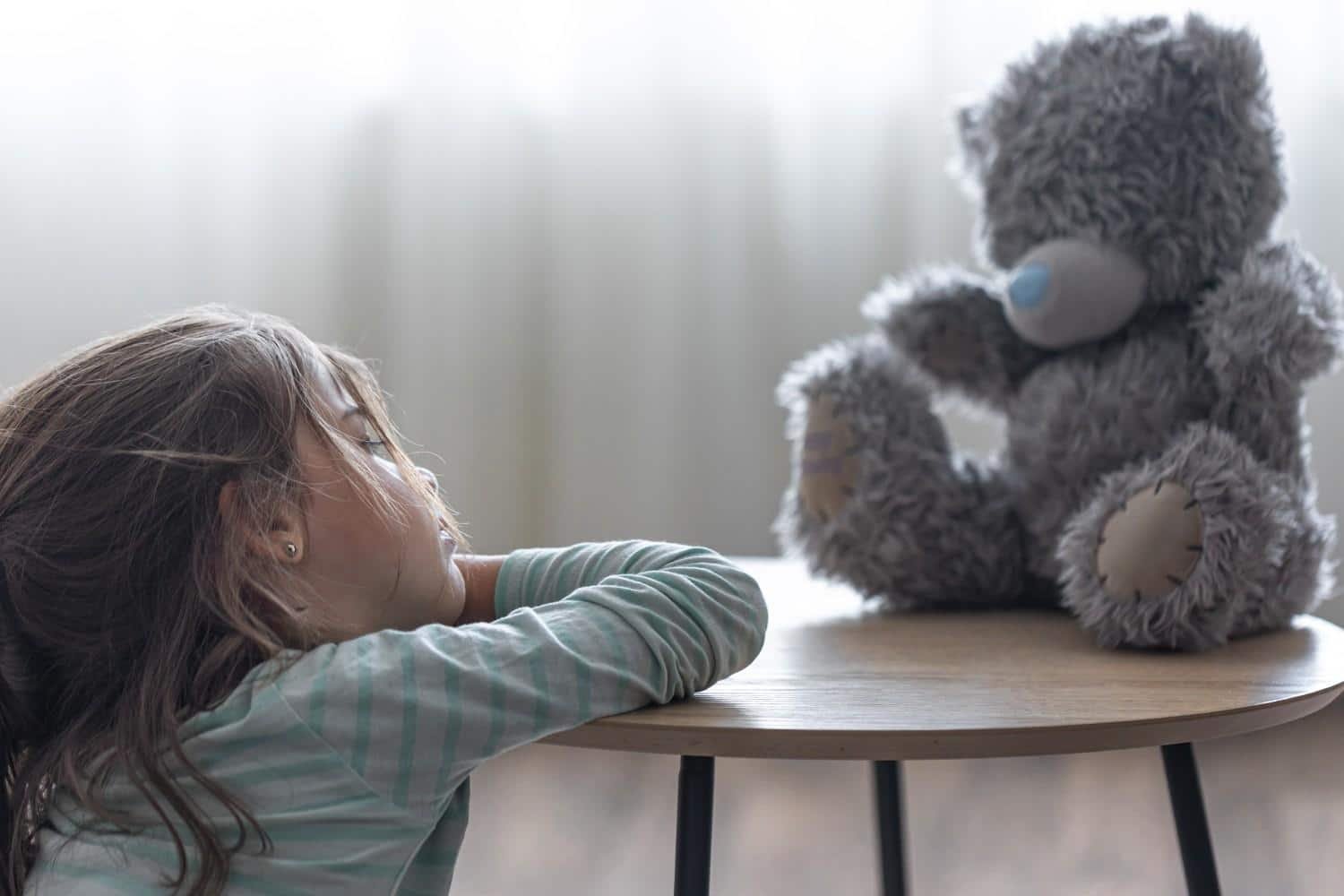
Your child wakes up with a stomachache every school morning. At birthday parties, they cling to you instead of joining the other kids. At night, you can hear them still awake, worrying about something that happened two weeks ago. You have been telling yourself it is a phase. That instinct is telling you something.
Anxiety in children is one of the most common mental health concerns affecting kids today, and one of the most frequently missed. Recognizing it early is not about labeling a child. It is about making sure they have the understanding and support they need at a time when it can make a real difference.
What Is Anxiety in Children, Really?
Anxiety is not just nervousness. It is a persistent pattern of worry, fear, or avoidance that exceeds what is typical for a child’s developmental stage and begins to interfere with daily life.
Some anxiety is healthy. A child who feels nervous before a recital or a big test is experiencing something appropriate. That tension is part of how the nervous system prepares for challenges. The concern arises when worry becomes disproportionate, difficult to interrupt, or starts narrowing what a child feels able to do.
Parents often encounter several patterns: worry tied to separation from caregivers, discomfort in social situations, generalized worry that shifts from topic to topic, and strong fear responses to specific situations or objects. Each of these can look different from child to child, and none fit neatly into the picture most adults carry of what anxiety looks like.
Signs of Anxiety in Children: What to Watch For
The signs of anxiety in children can look surprisingly different from what adults expect. Because anxious children often internalize their distress rather than act out, their struggles can go unnoticed for a long time. The child sitting quietly at the edge of the playground may be carrying just as much as the child who melts down at the school drop-off line.
Emotional signs
Children experiencing anxiety often worry excessively about things that seem minor to the adults around them: a test, a change in routine, a sleepover. They may carry a persistent sense that something bad is about to happen, become tearful or distressed quickly when facing uncertainty, or seek constant reassurance from parents without ever feeling fully settled by it.
Behavioral signs
Behavioral changes are often where parents first notice something shifting. A child may start refusing activities they previously enjoyed: school events, playdates, sports. They may cling beyond what seems typical for their age, have emotional outbursts that feel disproportionate to the situation, or have increasingly difficult mornings, with goodbyes stretching longer and longer.
Physical signs
The body carries anxiety too. Recurring stomach aches or headaches without a clear physical explanation are common. Sleep becomes harder: difficulty falling asleep, frequent waking, or reluctance to sleep alone. Appetite may shift. Some children appear physically restless, tense, or unable to settle.
Seen together, or persisting over time, these signs point toward something that calls for professional anxiety support. An important note for parents: anxious children are often the quiet ones. They internalize their distress rather than act out, which means their struggles can go unnoticed for a long time.
What Causes Anxiety in Children?
Anxiety is rarely caused by a single thing. It is almost always the result of several factors interacting, and it is not caused by bad parenting.
Temperament and biological factors
Some children are wired to be more sensitive to perceived threats. A family history of anxiety or mood-related patterns can increase susceptibility. The nervous system’s baseline reactivity varies from child to child, and some children process the world at a higher level of intensity from early on. You can learn more about what anxiety is and how it impacts daily life.
Environmental and life stressors
Major transitions can shift a child’s anxiety level significantly: starting a new school, a move, a divorce, or the arrival of a sibling are common examples. Academic pressure, difficulties with peers, conflict at home, and exposure to instability all play a role. Traumatic experiences, including ones that may seem small to adults, can have a lasting effect on children who are especially sensitive to disruption.
The digital environment
Parents often ask what causes anxiety in children, and the honest answer is that it is rarely one thing. The digital environment, however, has become an increasingly relevant factor. Even for younger children, exposure to distressing news content, social comparison, and the pressures of online interaction can elevate baseline anxiety. Removing screens entirely is rarely the solution, but the content children encounter and the timing of that exposure are factors families are actively managing.
How Anxiety Affects a Child’s Everyday Life
Anxiety does not stay contained. Over time, it shapes a child’s experience across multiple areas of life.
Academically, anxious children may struggle to concentrate, avoid participating in class, or see their grades decline. These changes are often misread as laziness or defiance. Socially, they may withdraw from friendships, avoid group settings, or find it hard to trust peers. Physically, disrupted sleep and recurring physical complaints feed back into more worry. At home, families sometimes begin structuring their routines around a child’s anxiety: avoiding triggering situations, offering constant reassurance. Over time, that accommodation can unintentionally reinforce the patterns families are trying to relieve.
The earlier anxiety is addressed, the less it can limit a child’s world.
What Parents Can Do: Supportive Steps at Home
Parents are not bystanders in this. There is real work that happens between therapy sessions, at the dinner table, and on the drive to school.
Validate without feeding the worry
Acknowledging a child’s feelings is different from confirming that their feared outcome is likely. Saying “I can see you’re really nervous about this” communicates that the feeling makes sense. Over-reassuring, such as “Everything is going to be fine,” can intensify anxiety over time because it teaches children that their worry requires resolution from someone else. The goal is to communicate that the feeling makes sense and that the child has the capacity to move through it.
Build confidence through small, brave steps
Avoidance makes anxiety stronger. Helping a child take small steps toward the things they fear, and marking those moments as acts of courage regardless of outcome, builds the tolerance that allows anxiety to decrease over time. A child who walks into the classroom without crying, even for ten seconds, has done something that matters.
Teach simple calming tools
Deep belly breathing is accessible even for young children: breathe in for four counts, hold for four, breathe out for four. Grounding exercises, such as naming five things you can see, four you can touch, and three you can hear, interrupt the spiral of anxious thinking. Some families find it helpful to designate a short daily “worry window”: a specific time to give worries attention, rather than letting them surface throughout the day. For more practical strategies, see our post on 11 ways to cope with anxiety.
Protect the fundamentals
Consistent sleep schedules, regular physical activity, and predictable daily routines have a measurable effect on anxiety in children. Anxious children tend to do better when they know what to expect, and disruptions to these basics can compound the underlying difficulty significantly.
When home strategies are not enough
Reaching out for professional support is not a sign that something has gone wrong. It is a sign of attentiveness. If home strategies are not producing traction, or if anxiety is significantly limiting your child’s daily life, a conversation with a therapist is a practical and often important next step. Therapy for children and adolescents in Charlotte offers specialized support designed around each child’s needs.
How Montgomery Counseling Group Supports Anxious Children and Their Families
The MCG team works with children and adolescents using approaches supported by research, including cognitive behavioral therapy (CBT), play therapy, and dialectical behavior therapy (DBT), adapted to each child’s age, temperament, and experience. These modalities are among the tools the team draws from; no single approach fits every child.
Parents are active participants in this process. MCG clinicians work collaboratively with families, recognizing that parents are the most consistent presence in a child’s life and that progress in therapy connects to what happens in a child’s everyday environment.
Sessions take place in a setting designed to feel safe and accessible for children. Telehealth options are available for families who prefer to meet virtually or whose schedules make in-person attendance difficult.
Every child who comes to MCG brings a different history, a different set of strengths, and a different experience of anxiety. The approach reflects that.
Frequently Asked Questions
Is it normal for children to have anxiety?
Some degree of anxiety is a normal part of childhood development. Children move through predictable phases of fear at different ages: fear of the dark, of strangers, of starting school. It becomes a concern when anxiety is persistent, excessive, and begins to limit what a child can do in daily life.
How early can anxiety become a significant concern?
Anxiety can become a significant concern in children as young as three or four years old. Separation-related anxiety often emerges earliest, typically between 18 months and three years. Social anxiety frequently becomes more visible when children enter school settings.
Can anxiety in children ease without professional support?
Milder anxiety sometimes lessens over time, particularly in a stable and supportive environment. Without professional support, however, anxiety tends to persist and can intensify during transitions such as middle school, high school, or significant life changes. Earlier support is associated with better long-term outcomes.
Will therapy make things worse by focusing on fears?
Evidence-based therapy, particularly cognitive behavioral approaches, does involve gradually facing feared situations, but within a paced and supported structure. The goal is to build a child’s tolerance and confidence. Skilled child therapists calibrate the pace to the individual child.
Should parents tell their child’s school about the anxiety?
In many cases, yes. Teachers and school counselors can be important partners. They can offer accommodations, monitor social dynamics, and reinforce strategies the child is working on in therapy. A therapist can help parents approach that conversation in a way that serves the child.
Your Child’s Worry Doesn’t Have to Run the Household
Anxiety is not a fixed state. Children are capable of building new ways of responding to the things that feel overwhelming. The right support, the right environment, and time make a real difference.
If what you have read here reflects something you have been observing in your child, a conversation with a therapist is a practical place to start. You can also explore finding the right anxiety therapist in Charlotte, NC to take a confident first step.
Related Articles
- Overcoming Anxiety in Kids Through Play Therapy
- What Teen Anxiety Actually Feels Like When You’re a Teenager
- A Guide on Play Therapy in Charlotte for Parents
- How Play Therapy Helps Children Process Trauma and Build Resilience
- EMDR Therapy for Teens and Children in Charlotte, NC
- Your Child Isn’t Acting Out, They’re Asking for Help
- How Therapy Helps You Overcome Anxiety and Stress
- NIMH: Anxiety Disorders in Children
- APA: Anxiety in Children – What Parents Should Know