
In-person
4108 Park Road, Suite 410, Charlotte, NC 28209
Telehealth
Available to clients throughout North Carolina
Insurance
Aetna, Blue Cross/Blue Shield, Magellan, Medicare, United Healthcare
Free consultation
Available by phone or secure video before your first appointment
EMDR at Montgomery Counseling Group
Montgomery Counseling Group is a trauma-informed psychotherapy practice on Park Road in Charlotte, NC. Eye Movement Desensitization and Reprocessing (EMDR) therapy is one of the approaches our clinicians use, and it’s an area where we carry a credential that isn’t common in Charlotte.
EMDR for Complex and Developmental Trauma in Charlotte
Not all trauma is the same, and EMDR work is shaped by that difference. For single-incident trauma, a discrete event in an otherwise stable life, research documents significant reduction in distress in a relatively focused course of sessions. For complex trauma, which involves repeated experiences, relational harm, or events rooted in early childhood, the work is longer and requires more preparation before active processing begins.
A systematic review of randomized controlled trials found growing evidence that EMDR is effective for complex childhood trauma in both adults and children, though the researchers noted that treatment length and approach vary considerably depending on the individual.
John Burns’ clinical focus is complex and developmental trauma. He works with adults navigating the long-term effects of earlier relational experiences, the kind of history that often doesn’t have a single clear event to point to, but shapes how a person moves through the world nonetheless.
Many people who come to EMDR have done years of substantive work in talk therapy. They understand their history. They can name the patterns. A frequent client observation is “I get it, I know these heavy feelings come from the past, but they still come up every day.” That gap between knowing and feeling is where EMDR often works. What it adds is access to the part of the experience that insight alone does not reach: the body’s stored response to what happened. The two approaches work differently, and for many people, they work best in sequence.
John Burns on what EMDR reaches
“I get it. I know these heavy feelings come from the past, but they still come up every day.” That gap between knowing and feeling is where EMDR often works — it adds access to what insight alone doesn’t reach.
NCBI systematic review — EMDR for complex trauma (RCTs) →What EMDR Is and How It Works
EMDR is a structured, evidence-based therapy that uses bilateral stimulation (alternating sensory input, most often guided eye movements, though taps or tones can be used) to help the brain reprocess memories that didn’t file correctly the first time. It was developed by Francine Shapiro, Ph.D., in the late 1980s, and it has since become one of the most researched trauma approaches available. The VA National Center for PTSD lists it among the highest-recommended approaches across major clinical practice guidelines, including those from the Department of Veterans Affairs, the International Society for Traumatic Stress Studies, and the UK’s National Institute for Health and Clinical Excellence.
The core mechanism is bilateral stimulation. While holding a targeted memory in mind, you follow your therapist’s cues. The alternating sensory input activates both hemispheres of the brain in a way that researchers have compared to the memory consolidation that occurs during sleep, which may be part of why the processing can reach experiences that conscious reflection alone does not. Over the course of sessions, many clients find that the memory remains but loses its emotional charge.
EMDR works differently from talk therapy. The processing happens at the level of the nervous system. Many people find that this is precisely why it reaches experiences that years of verbal therapy did not shift. There is no requirement to put every detail into words.
Why EMDR Reaches What Talk Therapy Doesn't
| EMDR | Talk Therapy | |
|---|---|---|
| Where trauma is stored | Nervous system, amygdala, body | Same |
| Primary mechanism | Bilateral stimulation, both hemispheres | Verbal processing, prefrontal cortex |
| Verbal recounting required | No | Typically yes |
| Research base for PTSD | Highest recommendation: VA/DoD, WHO, APA | Strong, varies by modality |
Traumatic memories are stored in parts of the nervous system that operate below conscious verbal awareness. You can understand what happened, name it, talk about it at length, and still feel triggered, reactive, or stuck. That’s not a failure of insight. It’s that the part of the brain holding the memory hasn’t received the signal that the danger is over.
EMDR addresses this directly. Bilateral stimulation engages both hemispheres simultaneously, which appears to allow the nervous system to process and refile the memory in a way that verbal approaches alone don’t reach. The facts of what happened don’t disappear. The grip they have on the present loosens.
The 8 Phases of EMDR
EMDR follows a defined 8-phase protocol. Each phase has a specific purpose, and no processing begins until both you and your therapist are confident in your preparation and stability. The structure is intentional. It separates EMDR from techniques that borrow its surface features without delivering the full protocol.
1
Phase 1: History and treatment planning.
our therapist takes a thorough history and works with you to identify which experiences to target and in what sequence. The two of you build the treatment map together.
2
Phase 2: Preparation.
Before any processing, your therapist explains how EMDR works and builds your stabilization skills: grounding techniques, breathing approaches, and safe-place work you can draw on between sessions and whenever you need anchoring.
At MCG, preparation looks different depending on the clinician and the person. Michelle Daley works with children and adolescents to develop calming and resourcing skills in a developmentally appropriate way before any processing begins. John Burns frequently incorporates clinical hypnosis, an area of advanced study for him, to support the existing strengths and abilities each person brings to the work.
3
Phase 3: Assessment.
In this phase of EMDR therapy in Charlotte, You and your therapist identify a specific target memory and everything connected to it: the image that represents the worst moment, the negative belief it created about yourself, the positive belief you’d rather hold, the emotions present, where you feel it in your body, and how distressing it is right now on a 0-10 scale.
4
Phase 4: Desensitization.
While holding the target memory, you follow the bilateral stimulation cues. Your therapist guides you through sets, checking in between. Many people find the emotional charge attached to the memory decreases across sessions, though the pace varies.
5
Phase 5: Installation.
Once the distress has reduced, your therapist works with you to strengthen the positive belief identified in Phase 3. Bilateral stimulation helps reinforce it until it feels fully true in relation to the memory.
6
Phase 6: Body scan.
You hold the target memory and positive belief simultaneously while scanning your body for any remaining tension or sensation. If something’s still there, processing continues. EMDR attends to what the body holds, not only what the mind can name.
7
Phase 7: Closure.
Every session ends with a deliberate return to stability. Your therapist won’t leave you mid-process. You’ll leave each session grounded.
8
Phase 8: Reevaluation.
At the start of each new session, your therapist checks on the previous target. What’s shifted? What’s still present? This phase keeps the work responsive to where you are.
Do You Have to Describe Your Trauma in Detail?
No. EMDR does not require you to put every detail into words. You and your therapist work with the memory, but you control how much you say out loud about it. The processing happens neurologically, through bilateral stimulation and the brain’s own reprocessing capacity, not through narrative. Many people who have avoided therapy because they couldn’t face describing what happened find EMDR more approachable for exactly this reason.
How Many Sessions Does EMDR Take?
There’s no single answer. The range depends on your history, the nature of what you’re working on, and how the work unfolds.
For someone dealing with a single event in an otherwise stable life, the work tends to be more focused. For complex or developmental trauma, it takes longer, the preparation alone requires time, and processing typically unfolds across many sessions. That’s not a detour. It’s the work being done at the right pace.
Sessions run 60 to 90 minutes. EMDR can be used as a standalone approach or integrated with other modalities. Some people come to MCG specifically for EMDR after completing work with another therapist, or to add EMDR alongside the work they are already doing elsewhere. Others arrive having never been in therapy before.
Montgomery Counseling Group also offers EMDR intensives for adults. These are extended sessions running several hours, structured for people whose circumstances or goals make a concentrated format a better fit. A therapist in Charlotte can walk you through what that looks like and whether it may be appropriate for your situation.
If you are experiencing distressing emotions that appear to you, and perhaps to others, to be excessive given the current situation? Do you tend to be highly reactive to certain triggers? Are there dysfunctional beliefs that you have about yourself that on an intellectual level you know are not true?
If so, you may still be a good candidate for EMDR therapy in Charlotte.
What EMDR Can Help With
EMDR was developed for trauma but its application has expanded considerably. If you recognize these patterns in your own experience, EMDR may be a direction to discuss with your therapist:
- Phobias
- Pain Disorders
- Performance anxiety
- Disturbing memories that won’t settle
- Dissociation
- Stress Reduction
- Chronic pain or illness with an emotional component
- Eating concerns
This list is illustrative, not exhaustive. A consultation is the right place to find out whether EMDR fits your history and goals
EMDR at MCG is offered by two clinicians:

John Burns, MSW, LCSW, EMDRIA Approved Consultant
works with adults navigating complex and developmental trauma. The EMDRIA Approved Consultant designation is an advanced credential that qualifies clinicians to provide formal clinical consultation to other EMDR therapists.
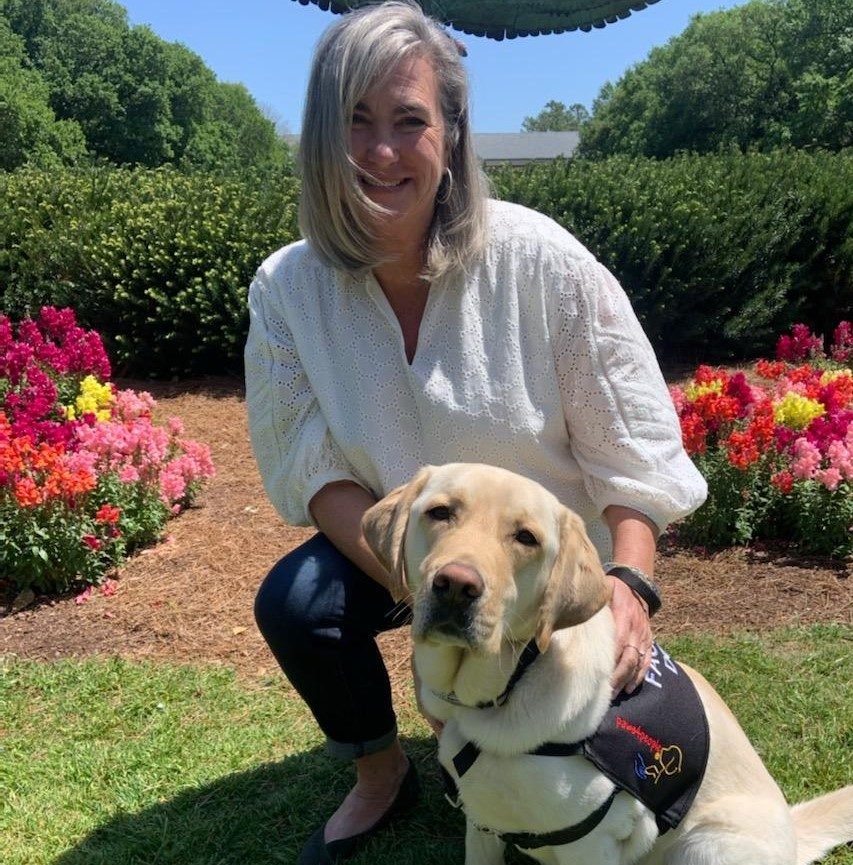
Michelle Daley, LCMHC
is an EMDR Trained Clinician who works with children and adolescents.
FAQ
What is the EMDRIA Approved Consultant credential?
The EMDRIA Approved Consultant designation is an advanced credential that qualifies clinicians to provide formal clinical consultation to other EMDR therapists in Charlotte. It requires significant post-training clinical experience and supervised consultation hours. John Burns, MSW, LCSW, holds this designation at Montgomery Counseling Group.
Is telehealth EMDR as effective as in-person?
Research supports telehealth EMDR therapy as producing outcomes comparable to in-person sessions. MCG offers secure telehealth EMDR sessions to clients throughout North Carolina alongside in-person sessions in Charlotte.
Does EMDR work for complex trauma, not just single-incident trauma?
Research supports EMDR for complex trauma, though the work is typically longer and requires more preparation than single-incident work. Montgomery Counseling Group’s EMDR practice includes clinicians with specific training in complex and developmental trauma. A consultation is the right place to discuss whether EMDR fits your history and goals.
What is the difference between an EMDRIA Approved Consultant and an EMDRIA Trained or Certified therapist?
EMDRIA training is the entry-level credential confirming completion of an approved EMDR training program. EMDRIA certification requires additional supervised hours and a formal application. The EMDRIA Approved Consultant designation sits above both, it qualifies the clinician to provide formal clinical consultation to other EMDR therapists as they develop their own practice.
Starting EMDR at MCG
The first step is a free consultation, available by phone or secure video anywhere in North Carolina. Consultations run 15 to 20 minutes and are a chance to ask questions and get a sense of whether MCG is the right fit before committing to anything.
You can book a free consultation online or use the Contact Me button if you have questions first.