
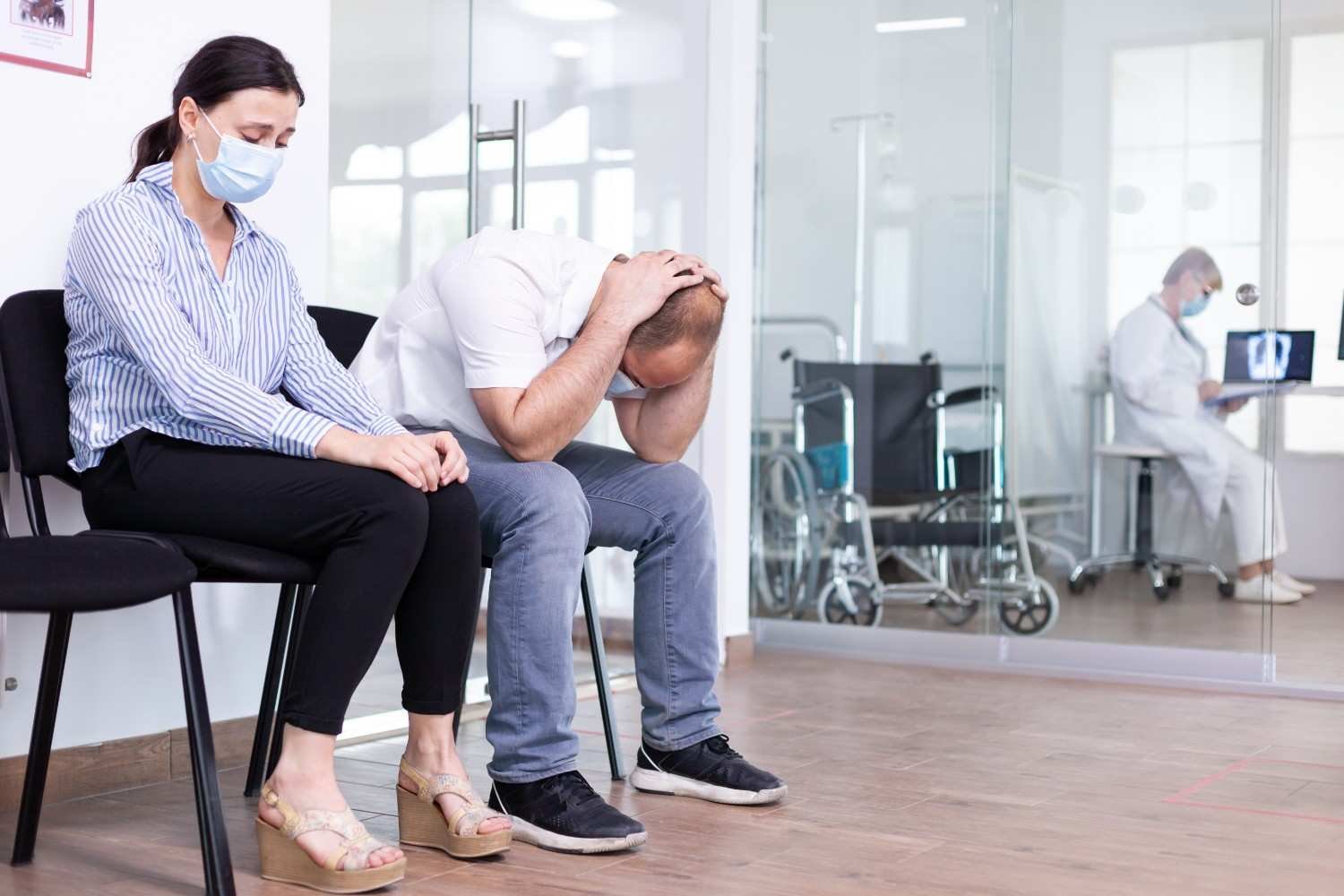
There is often a “before” and an “after.” Before the call from the doctor’s office. Before the word that reshaped how you understood your body, your future, and yourself. After a significant medical event or diagnosis, many people describe feeling like the ground shifted in ways they did not expect and were not prepared for.
This is not weakness, and it is not overreacting. It is a very human response to something deeply disorienting. And for many people, it meets the threshold for what therapists call medical trauma.
This post explores what medical trauma is, why it often goes unrecognized, and how therapy rooted in a trauma-informed, person-centered approach can help you find stable footing again.
What Is Medical Trauma?
Medical trauma refers to the psychological and emotional distress that can follow a significant health experience. That might be a new chronic illness, a frightening diagnosis, a complicated procedure, a hospitalization, a difficult delivery, or the long and exhausting process of trying to get answers about what is happening in your body. The National Institute of Mental Health provides helpful information on coping with traumatic events that speaks directly to these kinds of experiences.
The experience does not have to be a single dramatic moment. Medical trauma can also develop over time, through repeated procedures, feeling dismissed or unheard by the healthcare system, or the cumulative weight of living with an uncertain or evolving medical picture.
The ways people respond vary widely. Some notice a persistent, low-level anxiety that does not quite go away. Others experience intrusive thoughts, disrupted sleep, or a sense of disconnection from their own body. Some find themselves avoiding follow-up appointments because the medical setting has become difficult to be in.
Therapists describe these responses as adaptive. Your nervous system is responding to something that feels threatening. The reaction makes sense given what you went through.
Why Medical Trauma Often Goes Unrecognized
One reason medical trauma can be difficult to name is the widespread assumption that trauma only comes from violence, abuse, or sudden catastrophic loss. That assumption can leave people feeling like their distress does not count, or that they are making too much of something they should be grateful to have survived.
But the nervous system does not sort experiences that way. A terrifying diagnosis, a procedure that left you feeling powerless, a moment when you understood your body had changed in ways you had not chosen: these experiences can shake a person at a foundational level. At Montgomery Counseling Group, we have a name for this tendency to minimize your own distress. We call it the “green bean response” — after the familiar instruction: eat your green beans, because not everyone has enough to eat. Your nervous system does not compare your experience to anyone else’s before deciding whether to respond. What you are carrying is real and worth taking seriously, regardless of how it measures up against someone else’s story.
There is also a practical factor. When a serious medical situation is unfolding, all available energy tends to go toward managing it: appointments, treatment decisions, logistics, communicating with family. The emotional dimension often gets set aside out of necessity. Then, sometimes weeks or months later, when the immediate crisis has stabilized and the quiet arrives, the feelings surface. This delayed response is very common and does not mean something has gone wrong.
The Emotional Weight of a Life-Changing Medical Event
After a significant health experience, you may find yourself carrying several different kinds of loss at once.
There is often grief, for the life you expected, for the body you trusted, for plans that now need to be reorganized or let go. There can be fear about what comes next. There may be a complicated mix of gratitude and anger, or guilt for struggling when you feel you should be focused on recovery.
The relational dimension adds another layer. A serious illness or diagnosis affects the people around you, and managing their worry, their need to help, or their own fear can become its own kind of work. Many people describe feeling alone in the experience even when they are surrounded by people who care deeply.
These responses do not make you difficult or ungrateful. They reflect the weight of what you are carrying.
You don’t have to carry this alone. Meet our team at Montgomery Counseling Group and find the right support for where you are. |
How Therapy for Medical Trauma Can Help
Therapy for medical trauma is not about pushing you to reframe your experience or find the silver lining before you are ready. It is a space where you can bring all of it, the grief, the fear, the anger, the exhaustion, without having to manage someone else’s reaction to it. A trauma-informed therapist works at your pace and from your goals. The focus is on understanding what this experience has meant to you, how it has affected your sense of safety and your relationship with your body, and what you need in order to feel more grounded in daily life.
Some of the work involves processing what happened, making sense of the experience so it can move from something active and overwhelming to something you are able to carry with more steadiness. Building practical emotional regulation exercises into daily life can support the work done in sessions and help you manage the days when fear or grief feels very close.
What Therapy for Medical Trauma Actually Looks Like
Many people wonder whether therapy will require them to relive everything or discuss things they are not ready to approach. Person-centered therapy does not work that way. The therapist follows your lead. If you have questions before starting, our FAQs page covers what to expect from a first session.
In practice, sessions might explore how the medical experience has affected your sense of identity or your vision of the future. They might focus on relationships and how those have shifted. Depending on what is most helpful, the work might incorporate expressive approaches, mindfulness, skill-building, or traditional talk therapy.
The goal is not to “get over it.” It is to build the capacity to carry your experience in a way that allows you to live fully, including in the presence of ongoing uncertainty.
You Do Not Have to Be in Crisis to Reach Out
One of the things that keeps many people from seeking support is the belief that they should be managing better, or that therapy is only appropriate when things become unbearable. You can review our Rates & Insurance page to understand what coverage may apply before reaching out.
You do not need a formal mental health referral. You do not need to be falling apart. You can be someone working through something hard who would benefit from a space to think, feel, and be heard by someone trained to help.
A Note for Those in Supporting Roles
If you are supporting someone through a serious illness or medical event, this section is for you. Caregiving across the arc of a serious health situation can be exhausting, frightening, and isolating. You may be managing your own fear while holding space for someone else’s, and putting your own needs significantly aside for a long time. A daily self-care checklist can be a simple way to hold onto small practices that support your own wellbeing during an intensive caregiving period.
Therapy is available and appropriate for people in supporting roles, not only for the person at the center of the medical situation. Taking care of your own wellbeing is not secondary to supporting someone you love. It is what makes sustained, present caregiving possible.
Taking the Next Step
Life after a significant medical event looks different than it did before. That is real. What therapy can offer is not a return to exactly how things were, but support in building something stable from where you are now.
Healing from medical trauma does not mean forgetting what happened, or feeling certain about what comes next. It means developing the internal resources and the relational support to carry this with more steadiness, and to move forward with more ease than you have right now.
If you are in Charlotte, NC and looking for support, Moriah Yager, LCSWA works with adults and adolescents through medical trauma, loss, and major life transitions. We offer telehealth for those who prefer remote sessions. We invite you to schedule a consultation and take one step toward feeling more grounded.
Disclaimer: This article is for educational purposes and does not constitute medical or mental health advice. If you are experiencing a mental health crisis, please call 988 (Suicide and Crisis Lifeline) or go to your nearest emergency room.
Take the First Step TodayBook a free consultation — medical trauma therapy in Charlotte, NC with a compassionate, person-centered team. |
Continue Reading
You may also find these helpful: